Service
Bathroom Renovation
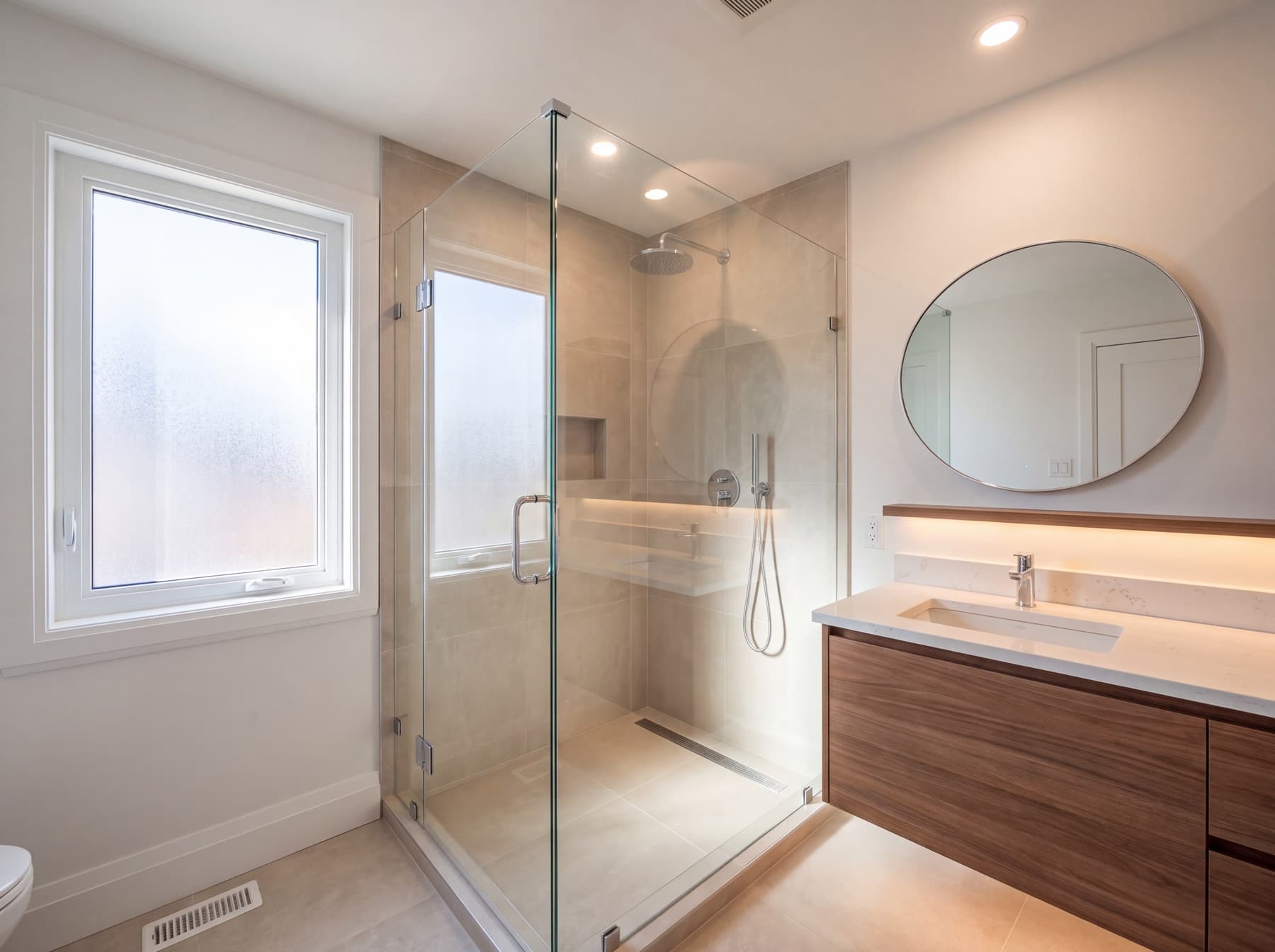
Focused bathroom renovation work for homeowners who don't need a full gut job — tub-to-shower conversions, new flooring, updated vanities and lighting, or plumbing fixture upgrades.
A dated bathroom doesn't always need a full remodel to fix. If the layout already works and the plumbing is in good shape, a renovation — new tile, a tub-to-shower swap, updated fixtures — delivers most of the visual and functional payoff without the multi-week timeline or five-figure budget a full remodel requires.
How Long Does a Bathroom Renovation Take?
A focused project like a tub-to-shower conversion generally takes 1 to 2 weeks start to finish, with the on-site installation itself — once materials are in hand — wrapping in 2 to 5 working days. Compare that to the 6-to-10-week timeline for a full remodel, and the difference comes down to one thing: the plumbing rough-in and layout stay untouched.
Most of that 1-to-2-week window is waiting, not building. Shower systems, glass panels, and tile are typically custom-cut for the specific bathroom, and that lead time runs 1 to 2 weeks before installation can even start. Once a crew is on site, the work follows a fairly fixed order:
- Demolition of the old tub and surrounding tile or wall material.
- Inspection of the subfloor and framing underneath — old tubs are a common hiding spot for slow leaks that haven't shown up yet.
- Plumbing adjustments to reposition drain and supply lines for the new shower base.
- Waterproofing and installation of the shower base, wall system or tile, glass, and fixtures.
- Finishing — grout, caulk, hardware, final walkthrough.
Key takeaway
Plan on 1 to 2 weeks total for a standard tub-to-shower conversion — most of it spent waiting on custom-ordered materials rather than construction. Custom glass, seating, accessibility features, or plumbing surprises found mid-project all extend that window, so it's worth asking upfront what could push the timeline.
Custom features are the main thing that stretches a renovation timeline. A frameless glass enclosure, a built-in bench, curbless-entry accessibility work, or moving a drain all take longer — either because the parts are made to order or the underlying labor is more involved. The other frequent cause of delay has nothing to do with the plan at all: what turns up once the old tub comes out. Older homes especially tend to reveal plumbing or water damage behind the tub surround that wasn't part of the original scope.
What Does It Cost to Retile a Bathroom?
A full retile — floor and walls together — typically runs $3,000 to $12,000, and for a small bathroom specifically, expect $3,500 to $5,500 including demo, disposal, and a new waterproofing membrane underneath.
Floors and showers get quoted separately, and the gap between them is significant:
- Floor only — for a standard 5-by-8-foot bathroom (about 40 sq ft), figure $120 to $2,100 depending on the tile chosen.
- Shower only — running $8 to $40 per square foot, or roughly $800 to $3,000 for a typical shower. A large walk-in with premium tile, an accent pattern, or a built-in niche can climb to $10,000.
Showers cost more per square foot than floors for a specific reason: vertical tile installation is slower to do correctly, and shower waterproofing has to be right the first time — a failure there causes hidden damage inside the wall that isn't visible until it's already significant.
What actually moves the retiling number:
- Tile size and material. Large-format tile goes in faster per square foot, but premium porcelain or natural stone costs more per unit.
- Layout complexity. A herringbone or chevron pattern takes meaningfully longer to install than a straight grid, and that shows up directly in labor cost.
- Add-ons. A shampoo niche, bench, or accent band each adds labor and material beyond the base square footage.
- Condition underneath. If the substrate needs repair or the old waterproofing has to be redone — common in older Raleigh-area homes — that's real added cost, not something worth skipping to land a lower number.
For a bathroom where the vanity, toilet, and plumbing are all fine and only the tile looks dated, retiling alone is one of the most cost-effective ways to make the whole room feel new again.
Renovation or Full Remodel — Which One Do You Actually Need?
The dividing line is the layout, not the amount of visible change. If the toilet, sink, and shower or tub all stay exactly where they are — and the work is tile, fixtures, a vanity swap, paint, or a tub-to-shower conversion — that's a renovation, and it's realistic to finish in one to two weeks without opening up the plumbing. If fixtures need to move, the footprint is expanding, or the room is being reconfigured, that's a remodel, and it needs the longer schedule and larger budget that comes with new plumbing runs and permitting.
A simple way to sort it out: a renovation makes what's already there look and function better; a remodel changes what's there in the first place. A bathroom that's just cosmetically tired — old tile, a worn vanity, a tub that never gets used — is usually a strong renovation candidate. A bathroom with a genuinely awkward layout, not enough storage, or plumbing that's failing regardless of finishes usually needs the full remodel to fix the actual problem instead of just covering it up.
Where We Offer Bathroom Renovation
What Homeowners Look For
A few things customers consistently tell us matter most.
Frequently Asked Questions
Ready to get this fixed?
Call now or request a free estimate — we'll get back to you fast.